

|

|
|
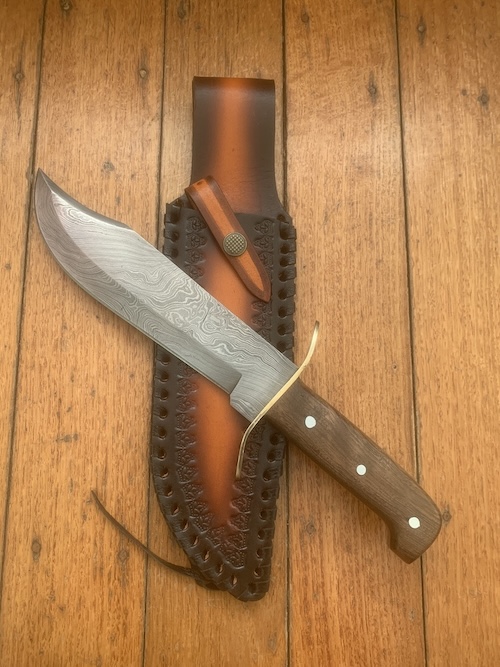
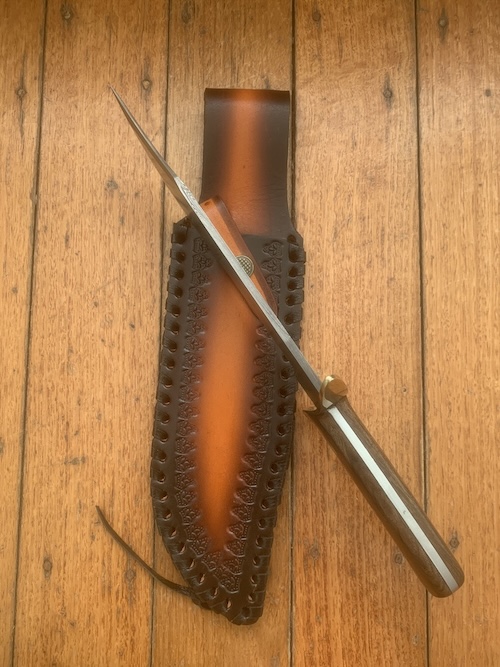

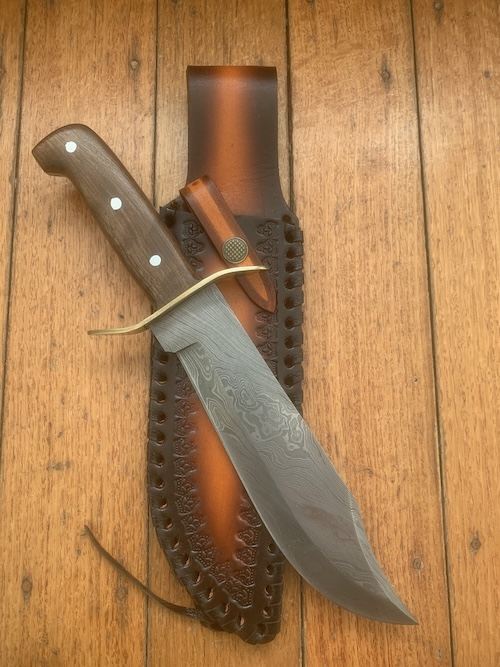

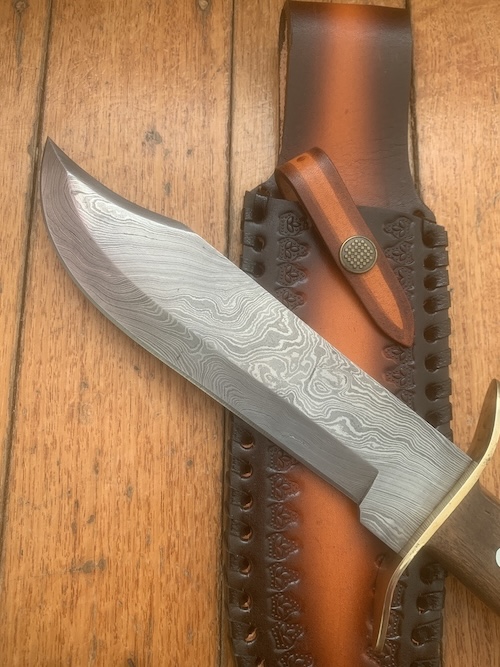






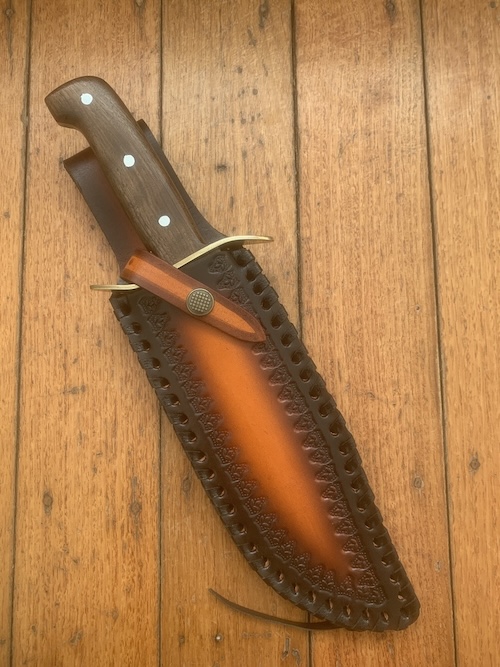



Damascus Knife: Damascus Western Alamo Bowie with Walnut Handle
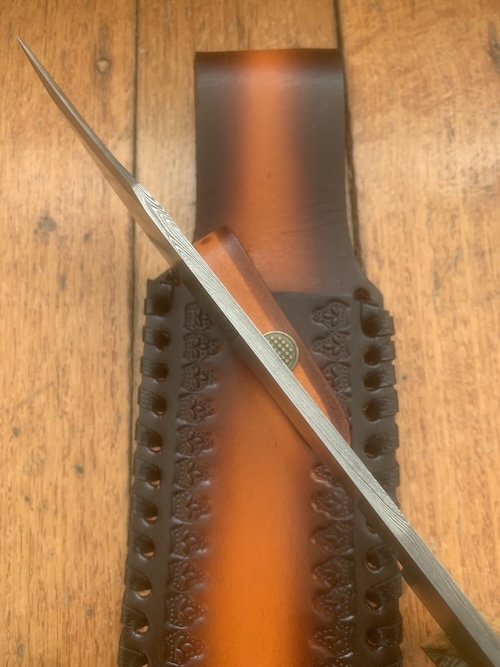
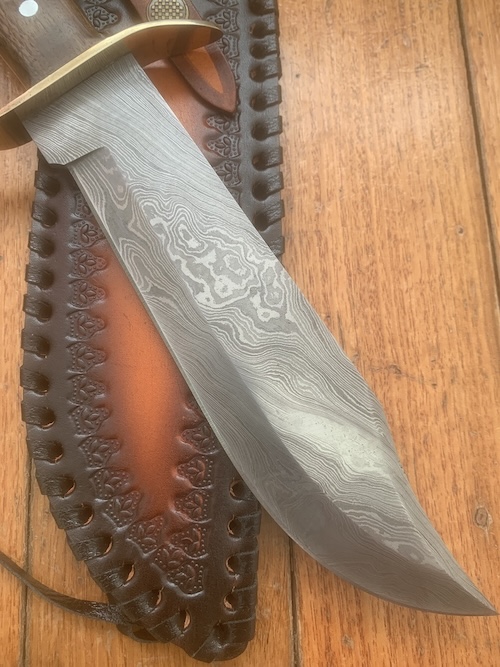
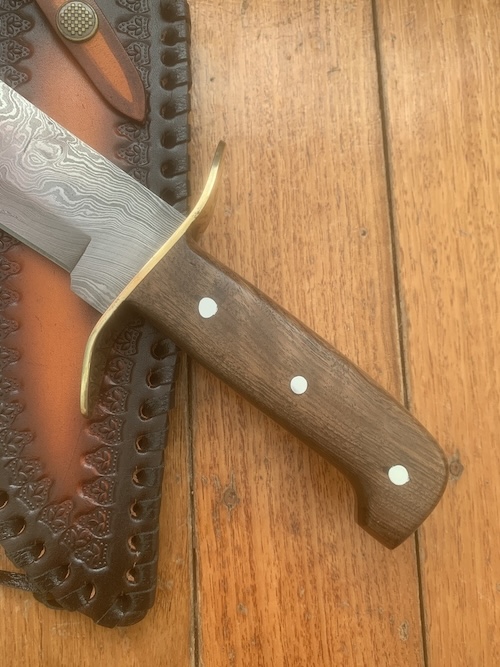
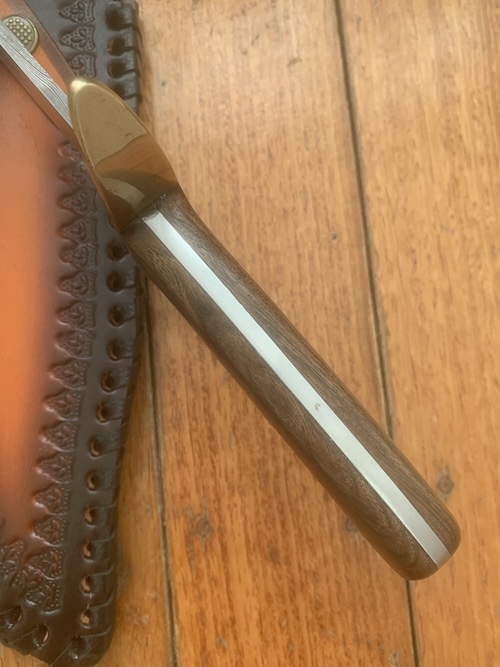
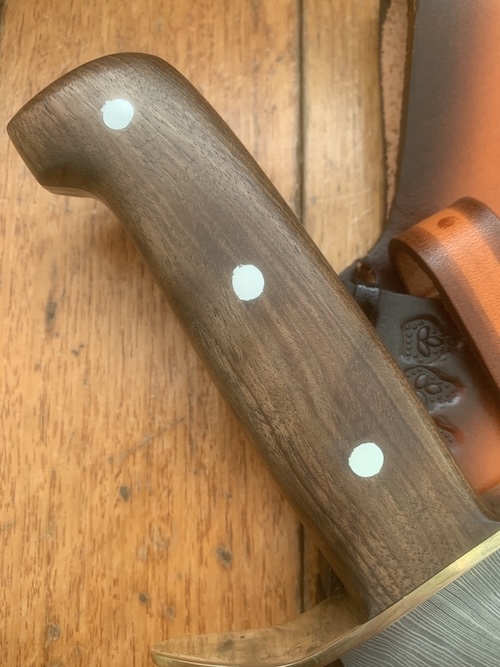
This is a beautiful handmade Damascus Western Alamo Bowie Style Knife with a solid Walnut Hardwood Handle.
Great Western Action Style Bowie Knife Only One of these knives were produced for us so a nice addition to the collection and unique.
A big Knife with an overall length of approximately 32.5cm, with a big 21cm blade made of 15N20 steel.
The handle is made of two thick Slabs of solid Walnut Hardwood which is approx 2cm thick and the blade is 4mm thick and 4.7cm at its widest point and it has a big Brass Guard of approx 10.5cm long.
These knives are all hand made using 15N20 Damascus steel folded 296+ times with handles made from natural materials from Sambar Deer Antler and Camel Bone.
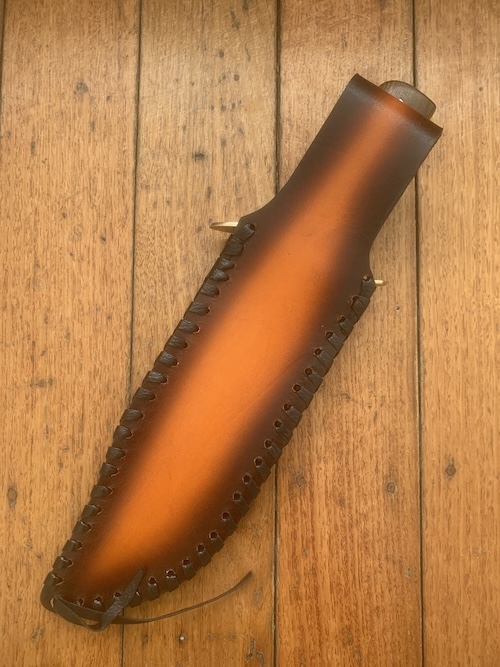
Comes with a custom made Patterned Brown leather sheath.
Please note that these knives are all hand made and any small marks etc are part of the hand made characteristics of these knives.
Only one of these made for us.
SOS#03650
As each knife is handmade individually, the damascus pattern varies slightly from knife to knife.
*** Some facts about Damascus Steel ***:
Pattern welding or Damascening, the traditional method for making decorative patterns on forged products, originated some hundred years before Christ.
The process was first seen in Persia around 500 BC and used to produce welded blades. The laminate composition of a Damascus Steel blade is attained by alternating layers of soft malleable wrought iron and a hardenable and temperable steel with a high carbon content. The steel portion of the blade gives it strength and the ability to hold a fine edge, while the iron provides elasticity so it won't break when struck. The layering of the steel patterns revealed by etching the surface has been refined into a decorative art.
The term Damascus Steel itself comes from the European Crusades who came in contact with these superior weapons at the trading city of Damascus. When the technology spread across Asia into India it was called Wootz. The Japanese surpassed all other regions with their refinement of lamination techniques. Today the pattern-welding technique is used for the most exclusive knives and swords. The material choice is limited to steel types which are hot workable enough and possible to weld by forging. Stainless grades or tool steels are very difficult to work in this respect.
Two popular components with blade smiths these days, are 1095 and 15N20, with good reason. On their own, each steel would make a good choice for blades and the contrast between the two steels is excellent. The 1095, although a simple steel, has just the right amount of carbon to make a superior blade and the addition of manganese serves to aid the hardening process and makes it etch quite dark. The 15N20 has nearly as much carbon and has about 2.5% nickel content added to make the steel very tough. The second benefit of nickel is that it withstands the etch very well for a good contrast with its darker counterpart. Another benefit of these steels is that they can be differentially hardened for an extremely tough blade while still retaining a superior edge.
These knives are all hand made using 15N20 Damascus steel folded 296+ times with handles made from camel bone and/or Sambar Deer Antler.
They are works of art, are usable, practical and very collectable.